
THERE’S a moment during a video catch-up to mark the year that has passed since the collapse of online travel tour streamer Heygo in which a woman speaks from a darkened room to those gathered on the call.
“Thank you for doing this, and keeping us all together as a group,” she says. “I really enjoy all the tours. It has been a blessing in my life.” Then there’s another moment, this time of silence, in which you might hear a pin drop.
And that, says John Wright, the tour guide who has helped keep the virtual tours flame burning since the April 11, 2023 demise of Heygo is the heart of the matter, the reason why he and a number of others have carried on.
 John Wright
“The tours are great, of course the tours are great,” he says. “But it’s more than that. We never lost sight of the fact that they had been a lifeline for some, and to turn off that switch, to lose that sense of belonging, would have been devastating.
“There are those in our community who do have very active social lives, but there are many others whose social networks and contacts, their friends and family, have maybe moved away – that’s just how modern life is – who didn’t have the social stimulation that they wanted and needed.
“Then Heygo came along, the Facebook group grew, and suddenly people talked to you every day. You had conversations. People noticed when you weren’t there. I think that’s such an important thing in this world of ours that is so divided up. We’re all, in effect, on our own.”

Read more: Why virtual travel still priceless in troubled times
Heygo first launched, under the name Virtualtrips, in the depths of the 2020 Covid-19 lockdown when the world came to a standstill. Suddenly, travel – a freedom we had all taken for granted – was no longer an option, other than an hour’s socially distanced exercise a day.
All over the world people became prisoners in their own homes.
University pals John Tertan and Liam Garrison founded a British start-up offering live streamed tours led by local guides. The first trip was a June 2020 stroll around London’s Bankside, and word-of-mouth soon spread the news that here was a respite from lockdown despair.
 Liam Garrison & John Tertan
The operation grew rapidly – too rapidly, it would later become apparent – and within a year it offered 250 locations, had notched up 100,000 reviews and rebranded as Heygo. By December 2021, it had attracted more than two million tour bookings, and started attracting the interest of the city.
In February 2022, Tertan announced that the company had secured a staggering $20 million raft of investors to take it to the next level – but the financial model was flawed. Tours were free-to-join, although virtual travellers were encouraged to leave a tip, typically £5 here in the UK.
It wasn’t enough. What had started almost as a hobby had ballooned into a big business where big returns were required. In March 2023, a saddened Tertan hosted a virtual ‘town hall’ meeting for the 10,000 members of the Virtual Voyagers Facebook group and announced the closure.
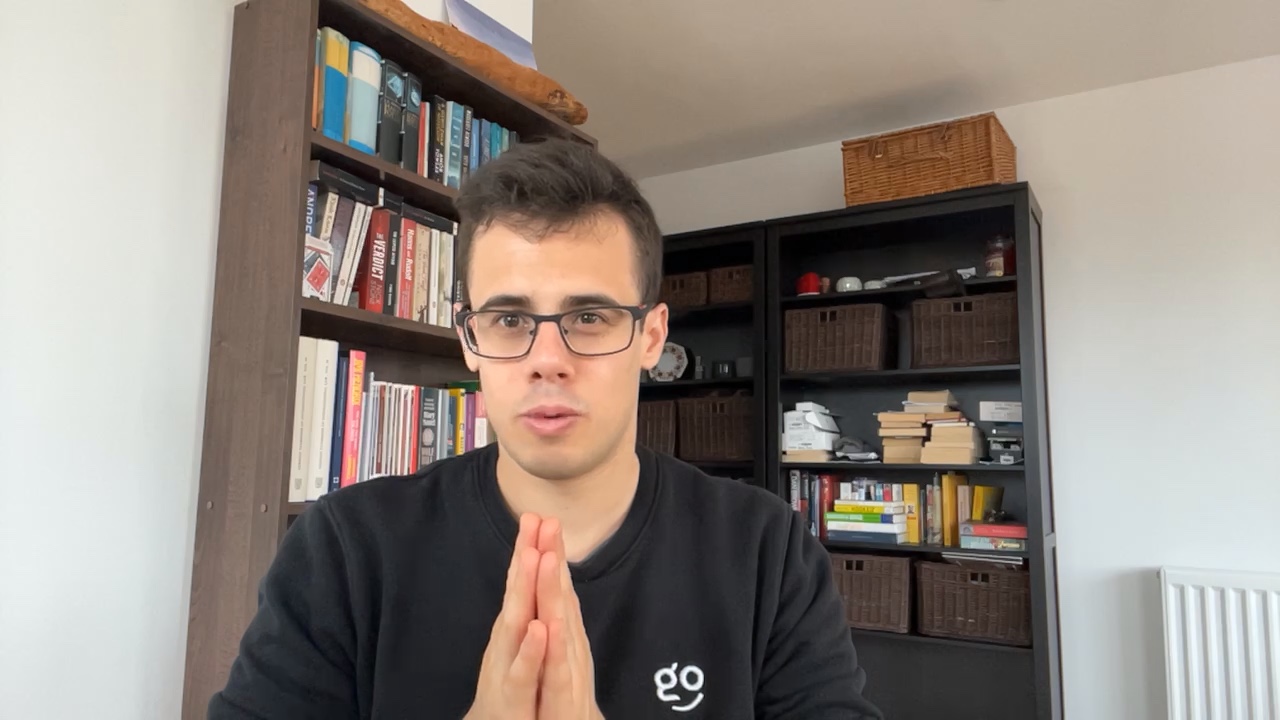 John Tertan announcing closure
Read more: Trace the Heygo story in my virtual travel archive
It caught members of the stunned community, and the guides themselves – for whom the virtual tours had been a real lifeline when travel was impossible – by surprise. But John Wright, who had seen Heygo’s competitors quietly closing, had already begun conversations to see if there was a way forward.
The founder of Instagrammable York Tours, and known through his All Points North social media, John had himself been one of the streamer’s guides and set about mobilising like-minded colleagues, setting up a collective and carrying on live virtual tours, albeit on a much more modest basis. In many ways, it felt like back to basics.
The Together Virtually website followed in December 2023 and has slowly but steadily attracted an audience while maintaining the high quality of the offering, despite being run effectively on a shoestring. A dedicated Together Virtually – Discover The World Facebook group currently has more than 5,300 members.

“We’re a year in to this after a baptism of fire,” says John. “What’s been incredibly encouraging has been the commitment of the audience. It’s very much relationship-driven. We’ve doubled down on the value of that interaction. We’ve worked hard to maintain goodwill and understanding.
“Being part of a community is so important. A lot of people feel dislocated in this world. It’s not a friendly world to be alone in. A lot of the stuff on social media is horrible. It’s not a friendly place – people just fight all the time.
“So to have a friendly place where you can feel valued; where you belong; where people know your name, know who your pets are; where people miss you if you’re not there; wish you a happy birthday – it doesn’t sound much, and it’s probably what many of us grew up with.

“It’s when you knew the neighbours, but that was how we used to live. The ‘new-ness’ of the Together Virtually community is that we’re going back to a time where you talked to each other, where you knew each other, where there was a communal vibe which, I think, these days has all but evaporated.
“I’m 54, and it was hugely different only 40 years ago, so if you’re in your seventies, it was a whole world away.
“The community is the nub of it. If you can get that bit right, the tours will look after themselves because we’ve got these brilliant guides. Yes, it would be nice to have new destinations and some more exciting places to visit but it’s not that important at the moment. It’s better to nourish what we have.
“That’s not shooting for the moon. It’s within reach.”

So, a year on from Heygo’s collapse, what does the future hold for its Together Virtually successor, its many followers, its guides and its offering? There’s a new booking system not far off, with email confirmations and reservation reminders, as soon as time zone technicalities are sorted out.
There’s a desire for more 1080 HD quality video; a hope that the live chat so loved by virtual travellers could one day be less lagged; a drive to bring back more former Heygo guides and travellers. But, first and foremost, there’s a need to sustain what’s already here, and start to grow.
Read more: Virtual voyagers took 87 million postcard snaps
“What we need to find is the path to sustaining what we are doing, growing awareness, growing the audience, and making it worthwhile for the guides too,” says John. “When I say we are going for growth, we’re not talking about millions. If we can double our core audience, that will be fantastic.

“We’re not about Heygo-style rapid expansion with multi-millionaire outside investors, we’re hoping to do this initially with the resources we’ve got. Our ambition is a good deal more modest. Heygo set out to be a competitor to Youtube but that’s not us.
“We’re not going to sell our soul. The most important thing to me is to look after our community, the way the community has looked out for each other. That’s too precious to risk. It has to remain about the community first and foremost.”
And it is to that community that John and his fellow guides are looking as they plan the next steps. A series of workshops begins tonight, with guides and travellers brainstorming ways in which they can grow the audience, which is currently predominantly empty nesters and retirees with free time to spare.

“We don’t want to start changing our offering to be something that we’re not,” warns John. “Heygo tried that and pushed some niche genres that attracted a number of people who were then disappointed to discover that the platform wasn’t all about that. What we have is a long-form experience for people who enjoy watching videos and learning in a social environment.
“Those who want five-minute videos are already extraordinarily well catered for online. We don’t do that. If that knocks out 95 per cent of the audience then that’s OK. What we want to find initially is the five percent – we want to determine how we find them, how we reach them, how we cater for their time zones.
“I’m interested in narrowcasting rather than broadcasting in that sense.”

Further good news for the future is that Together Virtually is not the only party in town. Other former Heygo guides continue to offer tours both through their individual social media channels and via the Virtual Travel and Tours Facebook group, which has close on 7,000 members.
There’s also the Going Places Virtually Facebook group, which currently numbers 1,700 followers, has started a Youtube channel and offers a tour calendar site with links. Although there is some crossover between the various groups, it’s clear there’s still a demand for virtual travel.
Heygo may be Hey-gone but the good work continues.
To learn more about the Together Virtually collective, and its stable of tour guides, and to see what tours are coming up soon, head to www.togethervirtually.com.



 Paul Cole Writes
Find amazing tours from awesome guides at Livestream Events
LikeLike
I was one who loved the Heygo community and the world of virtual touring, and was devastated with the closure of Heygo. I am so appreciative of John Wright and the collective of former guides, and the other people who have worked so hard to create new ways to cater to that community. Thank you to all of them, and to you, Paul, for writing about them. I’m doing my best to share the world of virtual touring and our virtual communities with everyone I can.
LikeLike
Well written John. Good Luck to all.
Vi Knebel
LikeLike