
THE forecast is good for a leading UK university next Spring – because the sun will be shining whatever the weather. What’s more, it will be shining not overhead but indoors.
The University of Birmingham has permanently acquired Helios – a large-scale sculpture of the Sun by British artist Luke Jerram, and it will go on display for free from March 2026.
The Exchange Banking Hall in Birmingham’s Centenary Square will initially host the artwork, which is an edition of Jerram’s celebrated international touring piece of the same name.
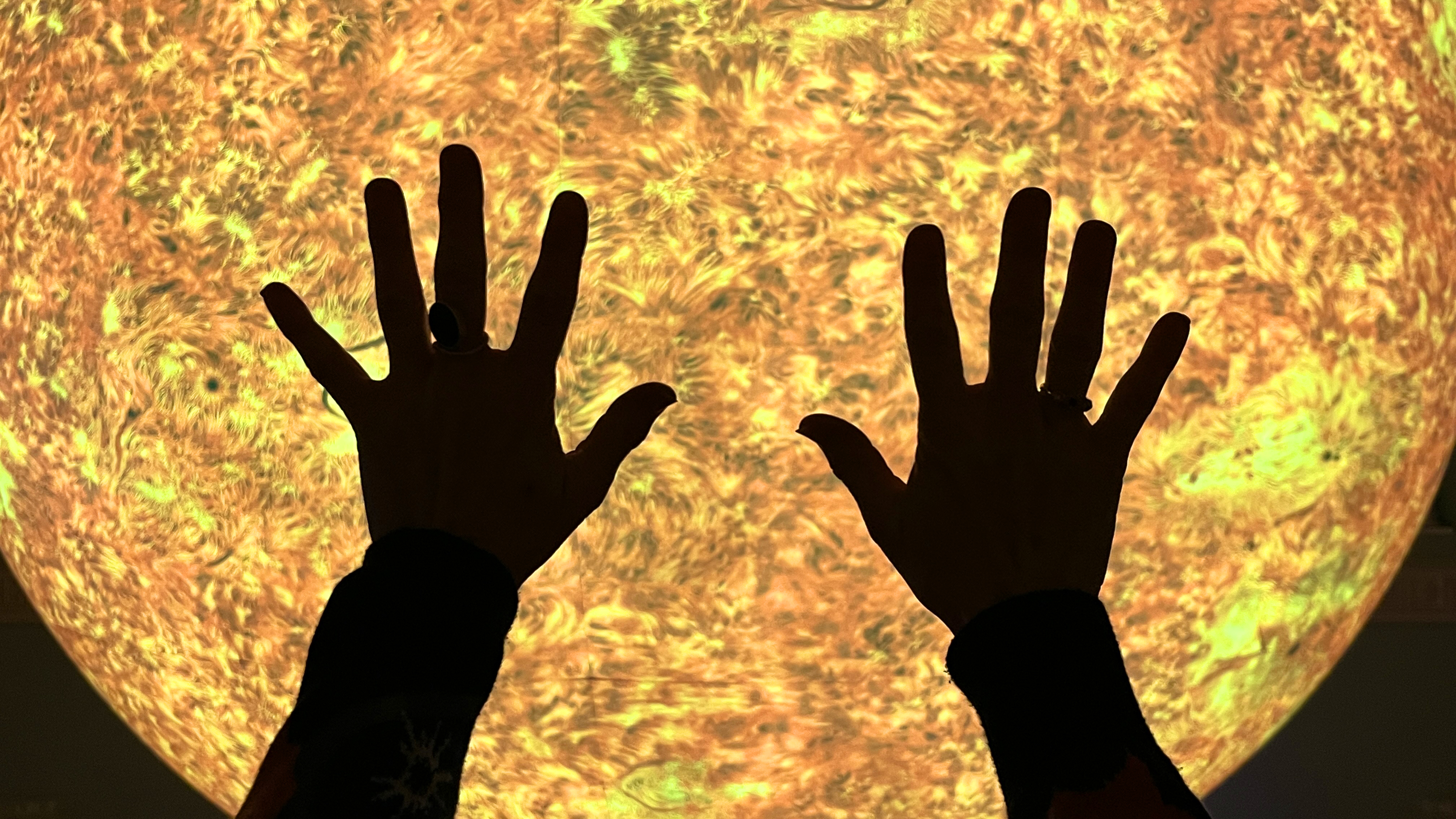
Using high-resolution photographic solar imagery, the sculpture reveals the astonishing details of the Sun’s surface, from swirling sunspots to dramatic solar flares, all illuminated from within.
Measuring five metres in diameter, the artwork is 278 million times smaller than the actual Sun, with each centimetre of the internally lit spherical sculpture representing 2780km of the star’s surface.
At this scale, planet Earth, by comparison, would be a meagre 46mm across – about the size of a golf ball.

The striking sculpture will be enhanced by a surround-sound composition by Duncan Speakman and Sarah Anderson, and accompanied by an exhibition showcasing climate change and space research by scientists and academics at the university.
Taking visitors on a journey from the depths of space, through our atmosphere, to the people, places, and creatures the Sun sustains, the exhibition highlights how seeing the Sun is central to understanding our planet’s past, present, and future.
The Exchange will also host an eight-month public programme of related events responding to the sculpture, which will be announced in Spring 2026.

“I’m thrilled the University of Birmingham has acquired the artwork,” says artist Jerram.”It is very dangerous to look at the Sun directly as it can damage our eyesight, so Helios provides a safe opportunity for the public to get up close to and inspect its extraordinarily detailed surface.”
Helios will officially open to the public at The Exchange in Centenary Square from March 20 to coincide with the Spring Equinox, and then move to long-term display at the university’s Edgbaston campus, where it will continue to be free and accessible for all.
You can find more information about the sculpture and exhibition on the University of Birmingham website. Images courtesy of James Dobson, Luke Jerram, and Luisa de la Concha Montez.

 Paul Cole Writes
Leave a comment